












































Small Business Protections Bill: What it Means for Gas Engineers
- 1. What is the Small Business Protections Bill?
- 2. The four big changes
- 3. 1. A 60-day cap on payment terms
- 4. 2. Mandatory 8% interest on late payments
- 5. 3. A ban on retention payments in construction
- 6. 4. The Small Business Commissioner gets teeth
- 7. What this actually changes for heating and plumbing engineers
- 8. If you mostly do domestic work…
- 9. If you sub on commercial or new-build work…
- 10. When does this all kick in?
- 11. What you can do right now
- 1. What is the Small Business Protections Bill?
- 2. The four big changes
- 3. 1. A 60-day cap on payment terms
- 4. 2. Mandatory 8% interest on late payments
- 5. 3. A ban on retention payments in construction
- 6. 4. The Small Business Commissioner gets teeth
- 7. What this actually changes for heating and plumbing engineers
- 8. If you mostly do domestic work…
- 9. If you sub on commercial or new-build work…
- 10. When does this all kick in?
- 11. What you can do right now
Whether you’re chasing retention from new builds or simply waiting to get paid for jobs you completed months ago, late payments plague the trades.
They waste your time, add stress, and make it difficult to invest in the future of your business — but the government has just introduced a new bill that promises to fix the worst of it.
Here’s what’s actually in the Small Business Protections Bill, what it changes for you as a heating and plumbing professional, and what to do in the meantime.
- 1. What is the Small Business Protections Bill?
- 2. The four big changes
- 3. 1. A 60-day cap on payment terms
- 4. 2. Mandatory 8% interest on late payments
- 5. 3. A ban on retention payments in construction
- 6. 4. The Small Business Commissioner gets teeth
- 7. What this actually changes for heating and plumbing engineers
- 8. If you mostly do domestic work...
- 9. If you sub on commercial or new-build work...
- 10. When does this all kick in?
- 11. What you can do right now
- 1. What is the Small Business Protections Bill?
- 2. The four big changes
- 3. 1. A 60-day cap on payment terms
- 4. 2. Mandatory 8% interest on late payments
- 5. 3. A ban on retention payments in construction
- 6. 4. The Small Business Commissioner gets teeth
- 7. What this actually changes for heating and plumbing engineers
- 8. If you mostly do domestic work...
- 9. If you sub on commercial or new-build work...
- 10. When does this all kick in?
- 11. What you can do right now
What is the Small Business Protections Bill?
On 19 May 2026, the government introduced the Small Business Protections Bill to Parliament — formally called the Commercial Payments Bill. It’s billed as the biggest overhaul of UK late payment legislation in over 25 years.
The government estimates late payments cost the UK economy £11 billion a year and close 38 businesses every day. Tradespeople are named specifically as one of the groups it’s designed to help, coming as no surprise when our own data shows the average gas engineer is owed £6,256 in late payments.
The bill is about business-to-business (B2B) payments, so if you only do domestic work for homeowners, much of it doesn’t apply directly to you. If you sub on commercial or new-build jobs, it could change things significantly.
The four big changes
1. A 60-day cap on payment terms
Large firms paying smaller suppliers will be capped at 60 days for payment terms. For heating engineers doing commercial work, this is the bit that matters most for cash flow.
It applies to large firms paying small suppliers, not the other way around, and not to domestic customers. So homeowner work isn’t affected by this clause.
2. Mandatory 8% interest on late payments
Statutory interest on late B2B payments already exists in the UK. It’s currently 8% plus the Bank of England base rate, and you can charge it on any overdue commercial invoice today. Most engineers don’t, because either they don’t know they can or they assume it’ll cause friction.
The bill makes it mandatory. The interest applies whether or not you put it in your terms, which means commercial customers who pay late will owe you more without you having to fight for it.
See our full guide on charging late fees on heating and plumbing invoices.
3. A ban on retention payments in construction
Retentions are when the customer — usually the main contractor on a build — holds back a percentage of your invoice (typically 5%) until the work has been signed off and a defects period has passed. Sometimes that period is six months. Often it’s twelve. Sometimes it’s “never” because the main contractor goes bust and your retention vanishes with them.
For heating engineers fitting boilers, doing pipework, or installing systems on new builds, retentions can mean thousands of pounds tied up per job. Stack three or four jobs, and you’re effectively running an interest-free loan for a business that’s bigger, better-funded, and slower-paying than you are.
The bill bans the practice completely.
4. The Small Business Commissioner gets teeth
The Small Business Commissioner already exists. The bill makes the role enforceable.
The Commissioner will get powers to investigate poor payment practices, adjudicate disputes, and levy fines — with the government saying the worst offenders could be hit with penalties worth tens of millions. Audit committees at persistently late-paying companies will also be required to publish explanations of their poor payment performance.
What that means in practice: a real route to escalate that doesn’t involve a small claims court or a debt collection agency. If a big customer is dragging its feet, you’ll have somewhere to take it that has actual power to do something.
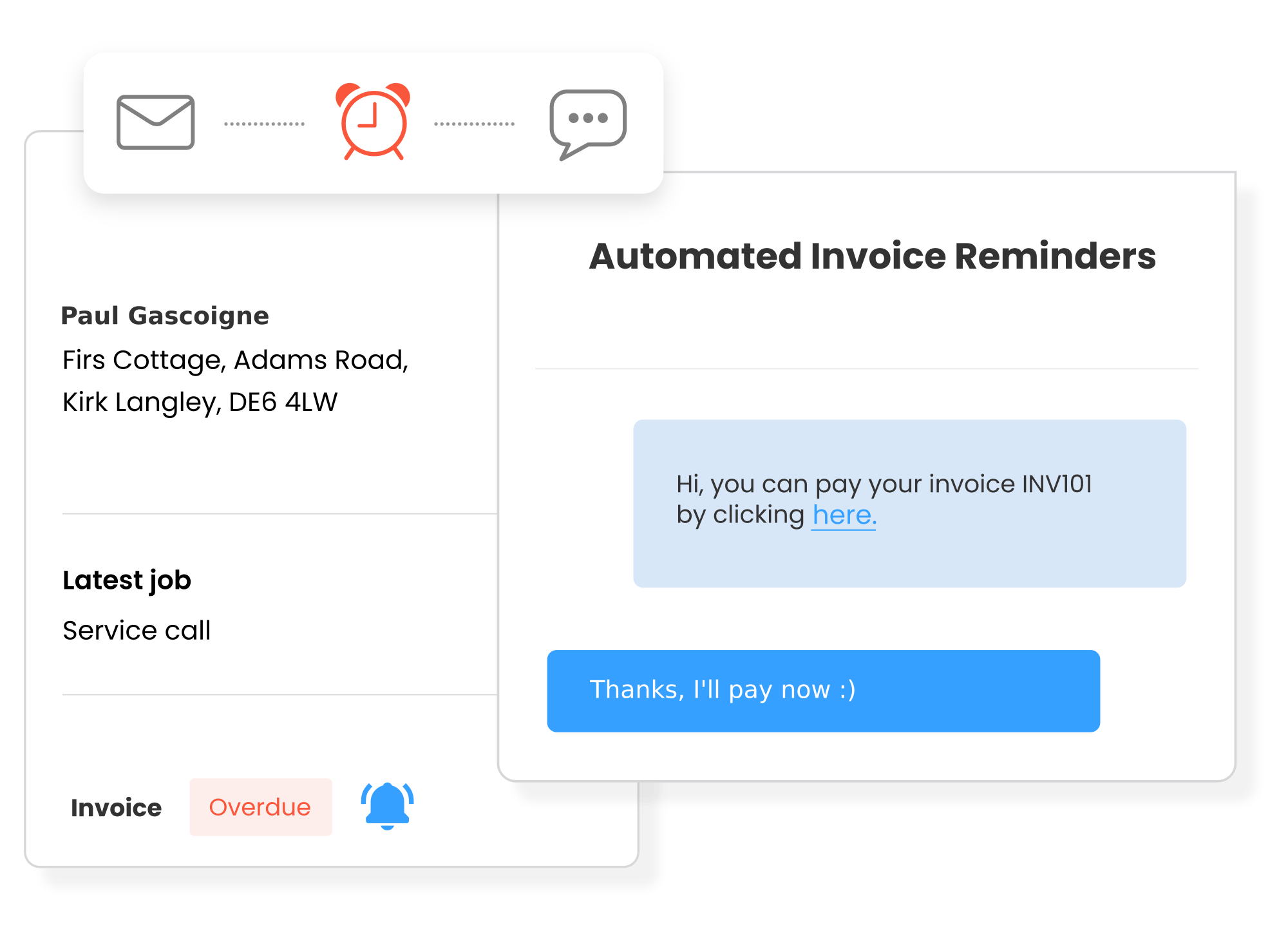
Automated payment reminders help GES users get paid 64% faster on average, improving cash flow and minimising the time spent chasing customers.
What this actually changes for heating and plumbing engineers
If you mostly do domestic work…
Given the bill is aimed at B2B payments, most doesn’t apply directly to you. However, it will still help:
- The cultural shift. Late payment becoming a national talking point means customers may take their invoice deadline a bit more seriously.
- The Small Business Commissioner becomes a more useful route to escalate if you ever do take on commercial work.
- Your existing rights — like statutory interest — apply to any B2B work you already do (letting agents).
The bigger lever for you is still tightening your own payment terms and chasing reliably. We’ve written a full guide on how to avoid late payments and get paid faster that covers what actually works.
If you sub on commercial or new-build work…
This is where the bill has impact. For heating businesses that do new-build installs, multi-site commercial maintenance, or work for managing agents and housing associations, the bill could meaningfully improve cash flow once it passes. The retention ban alone will free up working capital that’s currently locked away on completed jobs.
When does this all kick in?
It was introduced in the House of Lords on 19 May 2026, which means it’s at the start of its parliamentary journey, not the end. Realistically you’re looking at 12–18 months minimum before any of it becomes law.
What you can do right now
- Shorten your payment windows.
Most domestic engineers default to 30 days because that’s what their old paper invoices said. There’s no legal reason for that. Seven-day or fourteen-day terms work fine for domestic work and get money in the bank faster. - Charge statutory interest on overdue B2B work.
This is your right today, not in 12 months’ time. The current rate is 8% above the Bank of England base rate. - Automate the chasing.
Wasting your evenings sending invoice reminders is admin you shouldn’t need to do. Gas Engineer Software’s automated payment reminders send up to three sequential follow-ups on your behalf — businesses using them get paid 64% faster on average. - Know the escalation route.
If a customer flat-out refuses to pay, you’ve got options before legal action. We’ve written a step-by-step guide on what to do when a customer refuses to pay for work done.